Roof Waterproofing in Australia Best Methods & Materials Guide
Table of Contents
Roof Waterproofing in Australia Best Methods & Materials Guide

March 17, 2026
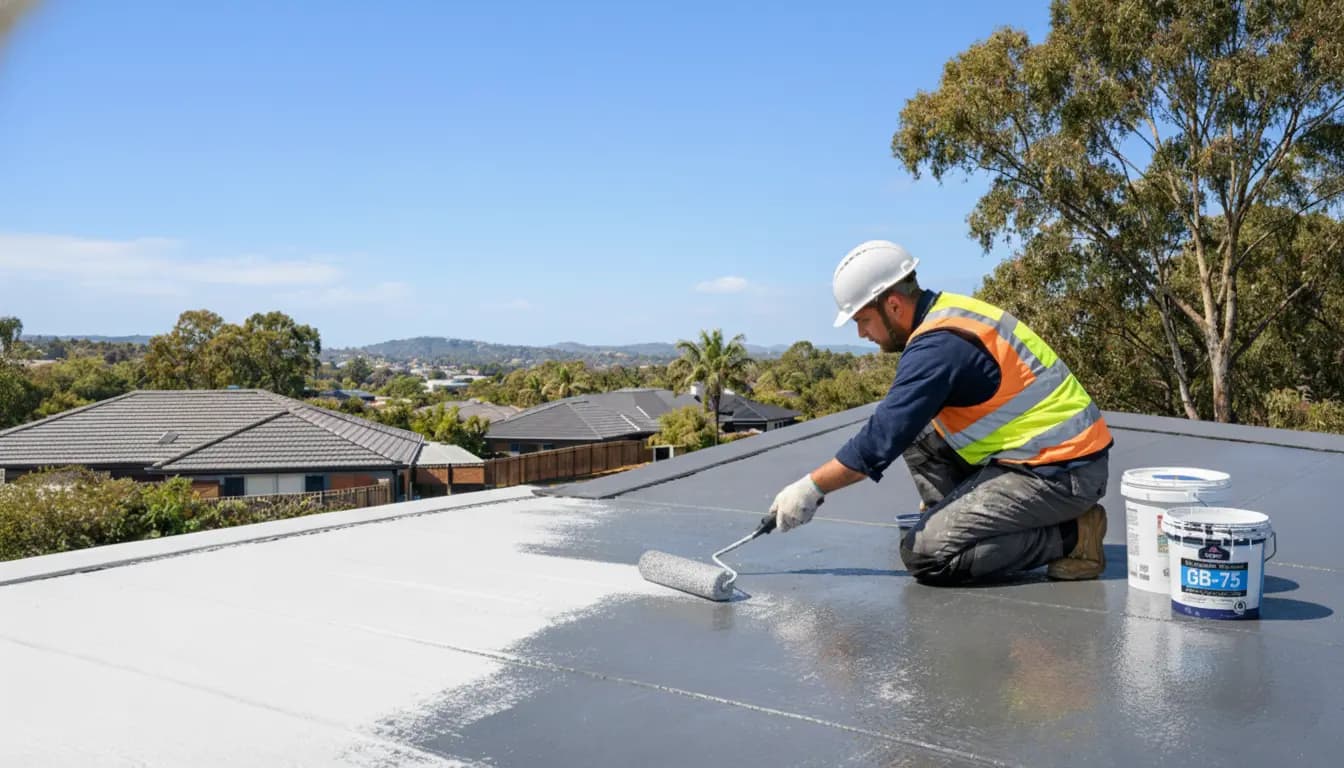
Roofs in Australia are regularly exposed to extremely harsh weather conditions. From the blazing summer sun to sudden heavy rain, roofing surfaces are constantly expanding, contracting, and getting damp. In the long run, such weather conditions can even damage very well-constructed structures.
Therefore, roof waterproofing is a very crucial aspect of building maintenance. A roof that has been waterproofed in the right way not only keeps water out but also safeguards the structural materials and avoids expensive repairs. By choosing the appropriate waterproofing materials for their roofs, the owners and managers of buildings will not only be able to prolong the lifespan of their properties but they will also be able to minimize the incidence of leakages.
Why Roof Waterproofing Is Important in Australia
The weather in Australia poses a variety of challenges to the roofing systems. The surfaces are required to withstand heat, moisture, and structural movement throughout the year.
Making a wise decision to get waterproofing done at present may drastically cut down on the expenses of repairs that you will have to face in the future.
It is very common for roofs to have small issues that people do not notice until these have caused damage. Recognizing at first the signs can be a great help in avoiding further big repairs.
• Strong UV exposure
Sunlight in many parts of Australia is intense. Disrupting cellular functions through exposure to UV light over time is one of the major doors through which roof membranes deteriorate. 1 Heavy and prolonged rainfall is a typical feature of some regions.
• Heavy rainfall in many regions
Cities and coastal areas regularly experience disastrous storms and seasonal rains.
• Temperature changes
The tiniest cracks in the roof can lead to water penetration if the roof is not properly waterproofed as per the Australian standards.
• Long-term building protection
A reliable waterproofing system protects insulation, ceilings, and structural components.Buying waterproofing of good quality today can result in cutting down your future repair costs substantially.
Common Signs Your Roof Needs Waterproofing
Besides, most small roof problems may not be visible until after damage has been done significantly. Identifying the main signs can be your turn to a bigger problem prevention.
• Water leakage during rain
One of the most obvious indicators. Even a small drip during heavy rain should be taken seriously.
• Damp patches on ceilings
Discoloured or damp spots often mean moisture has already travelled through roofing layers.
• Cracks in roof surfaces
Concrete and tiled roofs may develop small cracks that gradually widen over time.
• Peeling paint or mould growth
Moisture trapped beneath the surface can cause paint to lift and mould to develop.
• Ponding water on flat roofs
Standing water that remains long after rainfall can weaken roofing materials and increase leak risks.
These warning signs generally imply that the current roof leak prevention strategies need to be upgraded.
Types of Roof Waterproofing Methods
Various types of roof waterproofing systems are available in modern construction. Depending on the roof design and the environmental conditions, a particular roof waterproofing system may be more appropriate than another.
Polyurea Waterproofing
Polyurea Waterproofing Polyurea coating is a change of application primarily intended as the outer layer of Polyurea coating is extremely durable. Advantages are:
Advantages include:
- •
High elasticity
- •
Strong resistance to cracking
- •
Excellent adhesion to concrete and structural surfaces
Polyurea systems are widely used where structural movement is expected.
Polyaspartic Waterproofing Systems
Polyaspartic coatings are designed for durability and weather resistance. These systems cure quickly and provide strong protection against UV exposure and rain.
These coatings are usually referring to the waterproofing of terraces or flat roofs that are directly exposed to the elements, including water and strong sunlight.
SH-502 Polyaspartic Polyurea Waterproofing
Zocoo Australia uses WATERPROOFING SH-502 Polyaspartic Polyurea This system preserves the flexibility of polyurea and at the same time.
Key characteristics include:
- •
High stretchability for structural movement
- •
Powerful adhesion to roofing substrates
- •
Highly effective protection for exposed areas
- •
Perfect for expansion joints and waterproofing layers
Such features are what enable roof <a href="https://zocooaustralia.com/category/polyaspartic-polyurea-waterproofing/gb-75-polyaspartic-polyurea-waterproofing-15l" target="_blank" style="color:#ff3d37;">waterproofing solutions</a> to remain effective over time.
Liquid Waterproof Membrane
Liquid membranes are coatings that are rolled out and result in a single waterproof layer being formed. Their lack of seams is what mainly makes them suitable for flat and complicated roofs.
Benefits include:
- •
Seamless protection
- •
Easy application around roof details
- •
Good flexibility
Liquid membranes are extensively used for residential as well as commercial projects.
Cementitious Waterproofing
Cement-based systems are often applied to concrete roofs and structural slabs. They are simple to apply and bond well with masonry surfaces.
They are typically used as a base waterproof layer before additional protective coatings are added.
How to Choose the Right Roof Waterproofing Method
Selecting the best waterproofing approach depends on several factors.
- •
Roof type: Flat concrete roofs, metal roofs, and tiled roofs may require different systems.
- •
Exposure conditions: Roofs exposed to direct sun and heavy rain need coatings that resist UV and moisture.
- •
Structural movement: Buildings expand and contract over time. Flexible systems like polyurea help handle these movements.
- •
Project size and maintenance expectations: Larger roofs or commercial buildings may benefit from higher-performance waterproofing systems.
A proper evaluation helps ensure the chosen system provides reliable roof leak prevention.
Maintenance Tips for Roof Waterproofing
Even the best waterproofing system performs better with regular care.
- •
Inspect the roof annually: Routine inspections help identify early signs of damage.
- •
Repair cracks early: Small cracks can grow quickly if left untreated.
- •
Keep drainage systems clean: Blocked gutters or roof drains can cause water to accumulate and increase pressure on waterproofing layers.
- •
Reapply protective coatings when necessary: Over time, coatings may need refreshing to maintain strong protection.
Why Modern Waterproofing Systems Are Better
Waterproofing technology has improved significantly in recent years. Advanced coatings now offer greater flexibility, better bonding, and improved resistance to environmental stress.
Systems used by Zocoo Australia incorporate modern materials designed to handle Australian weather conditions. By combining strong adhesion with flexible coatings, these systems help reduce cracking and improve long-term performance.
For property owners, this means fewer repairs and more dependable protection for the building structure.
Conclusion
Keeping a roof protected is paramount to the health of any property. With Australia's harsh UV rays, abrupt storms, and constant temperature changes, waterproofing of the roof has become a very effective means of stopping structural damages.
Knowing the different roof waterproofing methods and selecting suitable materials could greatly influence the performance of a roof over an extended period of time. Along with annual check-ups and good upkeep, sophisticated waterproofing solutions for roofs contribute to making sure the roofs are well protected and free of leaks for years.
ZOCOO Products for This Application

GB-75 Polyaspartic Polyurea Waterproofing - 15L
Engineered for extreme conditions, built for lifelong durability. ZoCoo GB-75 is a high-performance, two component polyaspartic polyurea membrane engineered for the toughest waterproofing challenges. Ideal for wet areas, exposed surfaces, and potable water systems, it delivers rapid application, exceptional flexibility, and lifelong durability - resisting UV, chemicals, abrasion, and extreme weather with ease.
View GB-75
SCW-01 Polyaspartic Polyurea Waterproofing
Super adhesion. Colourless finish. Lifetime confidence ZoCoo SCW-01 Colourless Polyaspartic Polyurea delivers permanent, high-performance waterproofing with superior adhesion to various substrates. Its high tensile strength, wear resistance, and 600%+ elongation offer outstanding flexibility and crack resistance. Ideal for exposed, trafficable areas, the CLASS III membrane resists yellowing, corrosion, and chemicals.
View SCW-01
SH-502 Polyaspartic Polyurea Waterproofing - 15L
Ultimate self-healing shield against water, cracks & quakes ZoCoo SH-502 is the first healing, high-performance, fully bonded waterproofing membrane designed for non-exposed wet areas on walls and floors. With exceptional elasticity – over 1700% elongation – it’s built to withstand substrate movement, settlement, and even frequent earthquakes. Durable, flexible, and rupture proof – SH-502 delivers long lasting protection where traditional membranes can’t keep up.
View SH-502
PM-21 Repair Primer - 15L
Penetrates deeply for lasting adhesion, and substrate protection ZoCoo PM-21 is a two-component, high-performance repair primer formulated with premium expoxy resin and a Cardanol-modified phenolic amine curing agent. It offers strong substrate bonding, fast drying, chemical and corrosion on resistance, and low VOC performance – ideal for strengthening and sealing concrete and other porous surfaces.
View PM-21
Frequently Asked Questions
• What is roof waterproofing?
+• What is the typical lifespan of roof waterproofing?
+• Which roof waterproofing methods are commonly used in Australia?
+• What are the early signs of roof leakage?
+• How can homeowners improve roof leak prevention?
+