Best Waterproofing Methods for Different Roof Types in Australia
Table of Contents
Best Waterproofing Methods for Different Roof Types in Australia

March 03, 2026
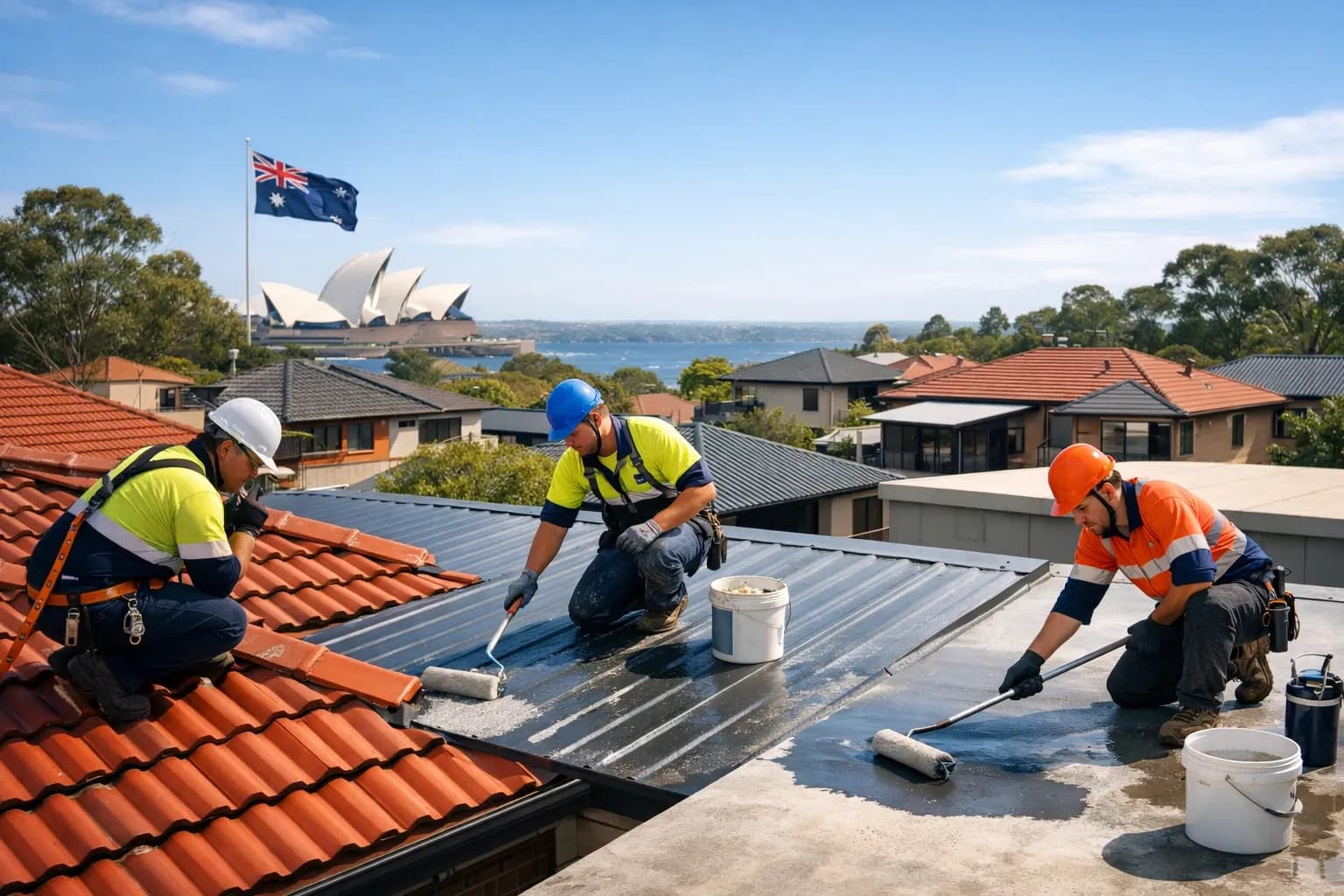
Roof leaks rarely start as a major problem. In most Australian homes, they begin as tiny weaknesses; a hairline crack, failed flashing, or ageing coating; and gradually turn into costly repairs. Choosing the right roof waterproofing solutions early can save thousands in structural damage, mould remediation, and interior repairs.
Because Australia’s climate ranges from intense UV exposure to heavy coastal rain and sudden temperature swings, not every system performs the same. This practical guide walks you through the most reliable roof waterproofing techniques, explains which method suits each roof type, and highlights proven roof leak prevention techniques for long-term protection.
Why Choosing the Right Roof Waterproofing Solution Matters
Selecting the correct waterproofing system is not just about stopping leaks today; it is about durability over the next 10–20 years.
Well-chosen roof waterproofing solutions help you:
- •
Prevent structural water damage
- •
Reduce maintenance costs
- •
Improve roof lifespan
- •
Maintain property value
- •
Avoid recurring leak repairs
In Australia especially, poor product selection is one of the leading causes of premature waterproofing failure.
Different Roof Types and Their Waterproofing Needs
Few rooftops react alike. Depending on what waterproofing methods for roofs are made of how steep they are, or where they sit, certain ways to keep water out work better than others.
Common Australian roof types include:
- •
Concrete roofs and balconies
- •
Flat commercial roofs
- •
Metal (Colourbond-style) roofs
- •
Tiled pitched roofs
- •
Low-slope extensions and patios
Each surface expands, contracts, and drains differently. That is why roof waterproofing methods Australia professionals recommend always start with correct roof assessment.
Best Roof Waterproofing Methods for Each Roof Type
1. Liquid Membrane Waterproofing (Best for Concrete & Flat Roofs)
Floating on rooftops like a second skin, liquid membranes rank high in adaptability for stopping water leaks.
What makes them effective:
- •
Seamless application
- •
Flexible movement tolerance
- •
Excellent crack, bridging ability
- •
Easy detailing around penetrations
Folks often find these handy when tackling tasks like:
- •
Concrete roofs
- •
Balconies
- •
Flat roofs
- •
Complex roof shapes
A thin coat spread just right turns into a seamless shield against leaks on homes, lasting as long as needed. Roof troubles fade when this fluid layer dries evenly across the surface.
2. Polyurethane Waterproof Coating
Firm yet flexible, polyurethane setups top roofs where long, lasting protection matters. Their stretchy nature handles shifts without cracking.
Key advantages:
- •
High flexibility
- •
Strong UV resistance
- •
Excellent adhesion
- •
Long service life
Best suited for:
- •
Exposed flat roofs
- •
Trafficable roof areas
- •
Harsh Sun Zones in Australia
Where heat shifts a lot, these coatings work especially well. Liquid membranes are among the most versatile roof waterproofing techniques available today.
3. Bituminous Membrane Waterproofing
The most widely used roof waterproofing methods Australia builders rely on, it regularly even now when sealing flat roofs against leaks. Still common across Australia, bituminous roofing shows up most often in big buildings rather than homes.
Strengths:
- •
Proven long-term performance
- •
Good water resistance
- •
Suitable for large roof areas
- •
Multi-layer protection options
Common applications:
- •
Commercial flat roofs
- •
Podium decks
- •
Low-slope concrete roofs
When putting things together, mistakes can slip in at the joins, those spots need extra care because they often fail first.
4. Cementitious Waterproofing
Frequently, cement mixes get picked when walls need to breathe plus match old brickwork well. Sometimes builders go this route because moisture can escape easily while sticking close to natural materials in older buildings.
Best features:
- •
Good bonding to concrete
- •
Cost-effective option
- •
Suitable for protected roof area
- •
Easy brush application
Most effective for:
- •
Under-tile waterproofing
- •
Internal roof structures
- •
Secondary protection layers
Still, flexibility tends to be lower compared to elastomeric coatings.
5. Sheet Membrane Systems
Built right at the factory, sheet membranes keep thickness steady across every stretch. Their uniform build stands out when comparing roof protection options. Quality stays locked in during production, which helps avoid on, site errors. What you get is a dependable layer that holds up under tough weather. Each roll arrives ready to perform without guesswork.
Benefits include:
- •
Uniform coverage
- •
High puncture resistance
- •
Reliable long-term barrier
- •
Suitable for large surfaces
Commonly used on:
- •
Commercial buildings
- •
Podium roofs
- •
Flat structural slabs
A wrong step during setup can break the seal. Proper placement holds things together.
6. Silicone Coatings for Metal Roofs
Few consider the way sun makes metal roofs shift, still openings appear if seals aren't done right. As screws relax with age, small motion creeps through, shielding works best when planned ahead.
Strengths:
- •
Proven long-term performance
- •
Good water resistance
- •
Suitable for large roof areas
- •
Multi-layer protection options
Common applications:
- •
Commercial flat roofs
- •
Podium decks
- •
Low-slope concrete roofs
Faulty setup risks failure right where pieces join. Seams demand care during assembly, weakness hides there if ignored.
Roof Leak Prevention Techniques Every Property Owner Should Know
Smart roof leak prevention techniques include:
- •
Regular roof inspections (at least annually)
- •
Prompt sealing of cracks and penetrations
- •
Keeping gutters and downpipes clear
- •
Checking flashings after storms
- •
Recoating ageing membranes on schedule
- •
Ensuring proper roof drainage
Stopping problems before they start can make a roofs water protection last much longer. Preventive care dramatically extends the life of any roof waterproofing guide system.
Roof Waterproofing Guide for Australian Conditions
Australia’s environment is particularly demanding on roofing systems. When selecting roof waterproofing solutions consider:
- •
UV intensity: Roofs down under face some tough conditions. Picking a waterproofing method? Think about these points.
- •
Heavy rainfall zones: Roofs facing strong sun need paint that won't break down under UV rays.
- •
Coastal areas: Where rain pours down hard, pick coatings that link together without breaks. Slopes matter just as much, shape them so water moves away fast. Built right, leaks stand less of a chance.
- •
Temperature swings: Salt air eats steel fast near oceans. So, pick coatings that fight rust when waves are close by. Metal tops need armour where sea spray flies every day.
Following climate-appropriate roof waterproofing techniques is key to achieving true long-term performance.
ZOCOO Products for This Application

GB-75 Polyaspartic Polyurea Waterproofing - 15L
Engineered for extreme conditions, built for lifelong durability. ZoCoo GB-75 is a high-performance, two component polyaspartic polyurea membrane engineered for the toughest waterproofing challenges. Ideal for wet areas, exposed surfaces, and potable water systems, it delivers rapid application, exceptional flexibility, and lifelong durability - resisting UV, chemicals, abrasion, and extreme weather with ease.
View GB-75
SCW-01 Polyaspartic Polyurea Waterproofing
Super adhesion. Colourless finish. Lifetime confidence ZoCoo SCW-01 Colourless Polyaspartic Polyurea delivers permanent, high-performance waterproofing with superior adhesion to various substrates. Its high tensile strength, wear resistance, and 600%+ elongation offer outstanding flexibility and crack resistance. Ideal for exposed, trafficable areas, the CLASS III membrane resists yellowing, corrosion, and chemicals.
View SCW-01
SH-502 Polyaspartic Polyurea Waterproofing - 15L
Ultimate self-healing shield against water, cracks & quakes ZoCoo SH-502 is the first healing, high-performance, fully bonded waterproofing membrane designed for non-exposed wet areas on walls and floors. With exceptional elasticity – over 1700% elongation – it’s built to withstand substrate movement, settlement, and even frequent earthquakes. Durable, flexible, and rupture proof – SH-502 delivers long lasting protection where traditional membranes can’t keep up.
View SH-502
PM-21 Repair Primer - 15L
Penetrates deeply for lasting adhesion, and substrate protection ZoCoo PM-21 is a two-component, high-performance repair primer formulated with premium expoxy resin and a Cardanol-modified phenolic amine curing agent. It offers strong substrate bonding, fast drying, chemical and corrosion on resistance, and low VOC performance – ideal for strengthening and sealing concrete and other porous surfaces.
View PM-21
AC-77 Anti Rust Coating
Powerful Rust Encapsulation, Long-Term Protection ZoCoo AC-77 is a high-performance, single-component anti-rust coating designed to be applied directly to rusted metal or concrete surfaces. Its advanced organic-inorganic hybrid formula not only binds with existing rust but penetrates deep into corrosion layers and surface pores. As it cures, AC-77 actively expels moisture and expands to fill voids, forming a dense, ultra-tough encapsulating layer that seals and protects the substrate.
View AC-77
Frequently Asked Questions
• What is the most effective roof waterproofing solution in Australia?
+• What is the usual lifespan of roof waterproofing?
+• Which waterproofing method is best for metal roofs?
+• Can roof waterproofing stop existing leaks permanently?
+• How often should roofs be inspected in Australia?
+