How to Waterproof a Concrete Floor or Slab: Step-by-Step Guide
Table of Contents
How to Waterproof a Concrete Floor or Slab: Step-by-Step Guide

November 17, 2026
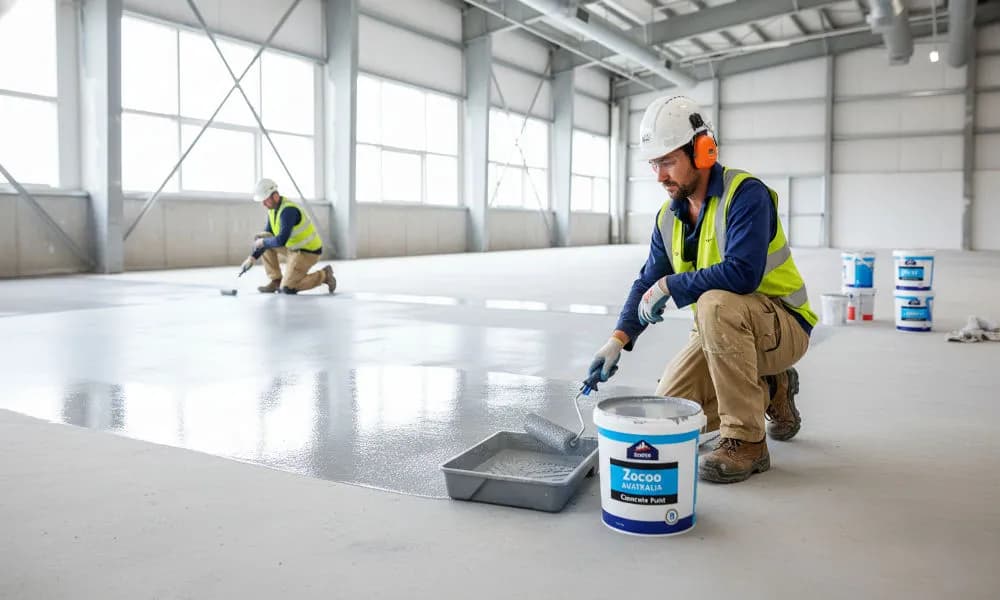
Summary: Waterproofing a concrete floor or slab follows a set order: confirm the slab has cured, test for moisture, clean and profile, repair cracks, prime, apply the membrane, then cure and inspect. This guide lists the tools and Zocoo products for each stage.
Concrete may look solid, but it is naturally porous. Moisture can move through cracks, joints and the concrete itself, making waterproofing an important step for floors and slabs exposed to water or damp conditions.
Waterproofing a concrete floor or slab doesn't have to be complicated. It follows a straightforward process, starting with moisture testing and surface preparation before moving on to priming, waterproofing and curing.
Concrete floors and slabs are commonly found in garages, balconies, patios, basements, workshops and wet areas. If they are not waterproofed properly, moisture can lead to dampness, staining, cracking or coating failure. For help choosing the membrane itself, see our guide to the waterproofing membrane for concrete.
How Water Gets Into a Concrete Floor or Slab
Concrete is porous, so moisture can enter a floor or slab from above or below. Common sources include:
- •
Rising ground moisture: Water vapour can move up through the slab from the ground below.
- •
Surface water: Rain, spills and ponding water can soak into exposed concrete, particularly on outdoor areas.
- •
Water pressure: Hydrostatic pressure can push water through cracks, joints and other weak points in the concrete.
If moisture is not properly managed, it can contribute to cracking, spalling, mould growth and waterproofing failure. Understanding where the water is coming from is an important part of concrete floor waterproofing. The source and condition of the slab will help determine the preparation required and the type of waterproofing system suitable for the application.
Checklist: What You'll Need
Before waterproofing, have your surface preparation tools, compatible primer, waterproofing membrane or coating, mixing and application tools, and clean-up supplies ready. For the full list by stage, see our guide to essential tools for waterproofing application.
Surface prep
S01 Scraper, VC01 Vacuum Cleaner, JC01 Joint Cleaner, K01 Knife and MT01 Masking Tape, all from our equipment range.
Primer
Waterproofing
Choose the appropriate system for your application; this could be any of the following depending on your project.
- •
SH-502: for floors that get covered (under tile).
- •
GB-75: for exposed slabs, terraces and rooftops.
- •
SCW-01: a clear coat for exposed slabs.
- •
FW-11: basements, underground garages and slabs where water pushes up from below.
Mixing and application tools
Electronic scale (ES01), a slow-speed mixer, and a brush, roller or electric sprayer.
Clean-up
Methyl ethyl ketone (butanone) for tools, used straight after application.
How to Waterproof a Concrete Floor Step by Step
1. Check that the slab has cured
New concrete is commonly given around 28 days to cure before waterproofing or coating. Zocoo's SH-502, GB-75 and SCW-01 call for concrete dried for more than 25 days and render for more than 5 days. Always check the product data sheet, as curing requirements can vary between systems.
2. Test for moisture
The easiest way to test for moisture is to tape a square of clear plastic firmly to the concrete and leave it for at least 16 hours. Condensation under the plastic or a darker area of concrete indicates moisture is coming through the slab.
3. Clean and profile the surface
Remove all oil, grease, dirt, and old sealers from the concrete. Once clean, grind or etch the surface as required to create a sound, slightly roughened profile that allows the waterproofing system to bond properly.
4. Repair cracks and joints
Fill static cracks with a compatible repair product before applying the waterproofing system. Treat movement joints with a suitable flexible sealant rather than rigidly bridging them with the coating.
5. Prime the concrete
Apply the primer specified by the waterproofing or coating manufacturer. This helps to ensure the substrate is sealed and improves adhesion between the concrete and waterproofing system.
6. Apply the waterproofing coat
Apply the waterproof membrane or coating by your chosen method and at the specified film thickness and number of coats. Where required, continue the waterproofing up walls and edges to create a continuous barrier. Unsure what waterproof membrane you need for your project? Contact us, and we can help you.
7. Allow it to cure and inspect
Once the waterproofing has been applied, inspect the finished surface before covering it or starting tiling. Check the floor, walls, corners, joints, edges and areas around penetrations and the waste for any gaps, pinholes or missed areas. Follow the product data sheet for the full curing time before allowing foot traffic, covering the surface or starting tiling.
Enquire About Waterproofing Today
Need help choosing the right waterproofing system for your concrete floor or slab? Contact Zocoo Australia today to discuss your project, product requirements and waterproofing approach.
Take the guesswork out of waterproofing a concrete floor or slab. Our friendly team can help you understand the available options and work through the right approach for your project.
ZOCOO Products for This Application

PM-21 Repair Primer - 15L
Penetrates deeply for lasting adhesion, and substrate protection ZoCoo PM-21 is a two-component, high-performance repair primer formulated with premium expoxy resin and a Cardanol-modified phenolic amine curing agent. It offers strong substrate bonding, fast drying, chemical and corrosion on resistance, and low VOC performance – ideal for strengthening and sealing concrete and other porous surfaces.
View PM-21
SH-502 Polyaspartic Polyurea Waterproofing - 15L
Ultimate self-healing shield against water, cracks & quakes ZoCoo SH-502 is the first healing, high-performance, fully bonded waterproofing membrane designed for non-exposed wet areas on walls and floors. With exceptional elasticity – over 1700% elongation – it’s built to withstand substrate movement, settlement, and even frequent earthquakes. Durable, flexible, and rupture proof – SH-502 delivers long lasting protection where traditional membranes can’t keep up.
View SH-502
GB-75 Polyaspartic Polyurea Waterproofing - 15L
Engineered for extreme conditions, built for lifelong durability. ZoCoo GB-75 is a high-performance, two component polyaspartic polyurea membrane engineered for the toughest waterproofing challenges. Ideal for wet areas, exposed surfaces, and potable water systems, it delivers rapid application, exceptional flexibility, and lifelong durability - resisting UV, chemicals, abrasion, and extreme weather with ease.
View GB-75
SCW-01 Polyaspartic Polyurea Waterproofing
Super adhesion. Colourless finish. Lifetime confidence ZoCoo SCW-01 Colourless Polyaspartic Polyurea delivers permanent, high-performance waterproofing with superior adhesion to various substrates. Its high tensile strength, wear resistance, and 600%+ elongation offer outstanding flexibility and crack resistance. Ideal for exposed, trafficable areas, the CLASS III membrane resists yellowing, corrosion, and chemicals.
View SCW-01
FW-11 Polyaspartic Polyurea Waterproof - 15L
Defends against subsurface pressure other systems can’t handle. ZOCOO FW-11 is a two-component, high-strength polyaspartic polyurea waterproofing system designed for demanding structural applications. Formulated with advanced polyaspartic polyurea, it resists internal hydrostatic pressure and provides a seamless, impermeable barrier. Mildew-proof and alkali-resistant, FW-11 is ideal for repairing and waterproofing damaged concrete and masonry structures.
View FW-11