Top 10 Waterproofing Mistakes to Avoid in Australia
Table of Contents
Top 10 Waterproofing Mistakes to Avoid in Australia

February 28, 2026
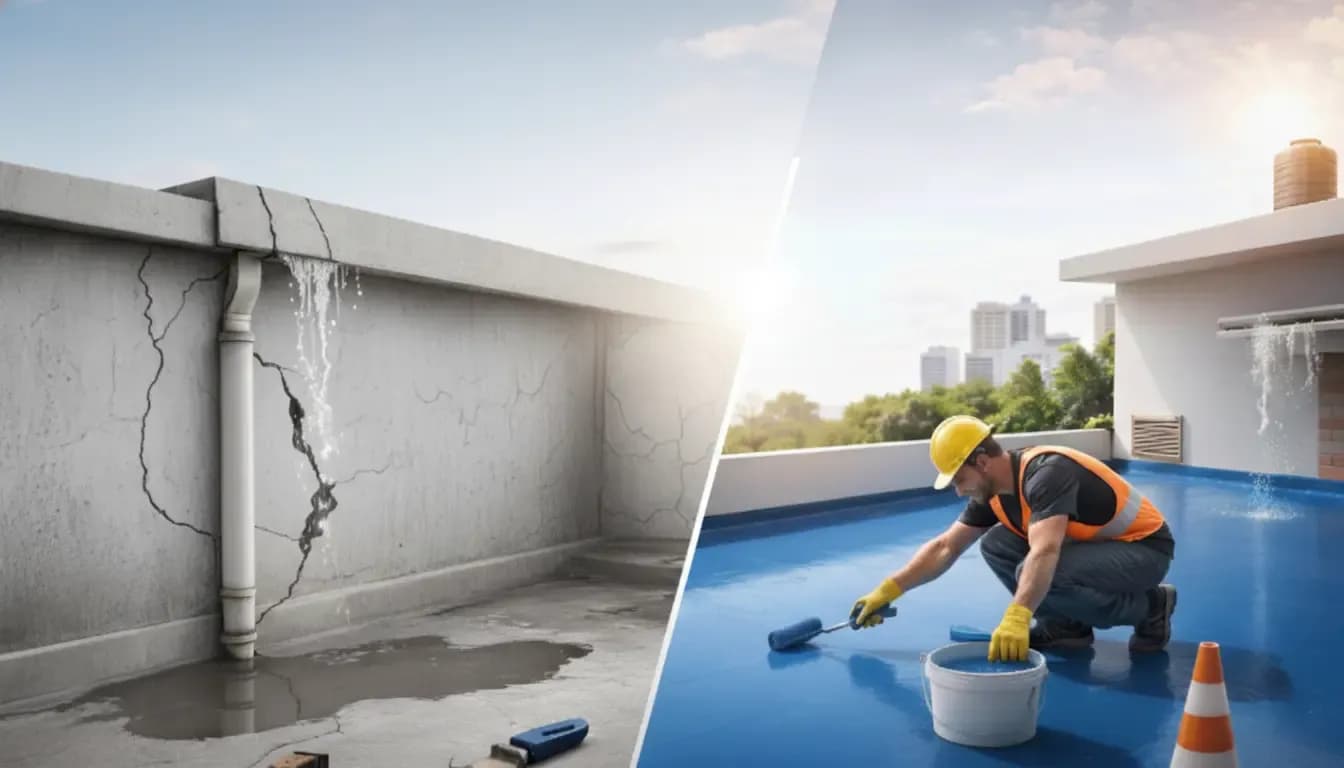
When it comes to bathroom and shower construction, waterproofing is one area where mistakes can quietly turn into very expensive problems. Many homeowners only discover an issue once tiles start lifting, mould appears, or water begins seeping into adjoining rooms.
The reality is simple: most waterproofing mistakes are preventable. With the right preparation, correct materials, and proper application, you can avoid premature failures and protect your home for years.
In this guide, we’ll walk through the most common waterproofing mistakes to avoid, what causes them, and how to get the job done properly the first time.
Why Waterproofing Mistakes Can Cost You Thousands
Water damage rarely stays contained. A small a membrane failure can lead to:
- •
Structural timber damage
- •
Persistent mould growth
- •
Tile delamination
- •
Costly bathroom rework
- •
Insurance complications
In Australia, waterproofing must comply with strict building standards. When shortcuts are taken, waterproofing failures often appear within just a few years, sometimes sooner in high-use showers.
Top 10 Waterproofing Mistakes to Avoid
1. Poor Surface Preparation
One of the most common waterproofing mistakes to avoid is applying membrane over a dirty or unstable surface.
What goes wrong:
- •
Dust prevents adhesion.
- •
Loose substrate causes membrane movement.
- •
Oils or residues create bonding failure.
Best practice: Always ensure the surface is clean, sound, and completely dry before applying any waterproofing materials.
2. Using the Wrong Waterproofing Product
One of the main reasons for early failure of a waterproofing system is inconsistent use with different materials.
Typical issues:
- •
Internal products used externally.
- •
Non-flexible coatings used in movement zones.
- •
Incompatible layer combinations.
Best practice: Select waterproofing solutions that are specially designed for bathrooms and wet areas.
3. Incorrect Membrane Thickness
Not applying enough membrane is an overlooked but serious fault.
Reasons:
- •
Thin membranes are liable to crack.
- •
The integrity of the waterproof barrier is compromised.
- •
The likelihood of water penetrating increases.
Best practice: Track the manufacturer's advised coverage rate and spread the membrane uniformly over all the areas.
4. Skipping Primer Application
Primer isn't a luxury; it's essential for main bonding. What will happen if you don't use it?
- •
Adhesion failure.
- •
Peeling off the membrane.
- •
Substrate isn't uniformly absorbed.
Best practice: A necessary step in your waterproofing system is to use the primer that is locally recommended.
5. Improper Sealing of Joints and Corners
One of the most susceptible points in any bathroom is the corners and junctions.
Vulnerable areas:
- •
Floor-to-wall junctions
- •
Internal corners
- •
Pipe penetrations
- •
Shower niches
It is highly recommended: Reinforcing tape should be used, and a full membrane coverage should be applied on all transitions.
6. Not Allowing Proper Drying Time
Its being rushed is one of the most costly common waterproofing mistakes in shower areas.
Typical issues:
- •
The membrane stays soft under the tiles
- •
Adhesion failure
- •
Trapped moisture
Good practice: It is important to wait for the membrane to be completely cured before the next coat or tiling; a surface may feel dry but still have moisture at a deeper level.
7. Poor Drainage Planning
Waterproofing cannot be a substitute for bad slopes.
Drainage errors consist of:
- •
Lack of sufficient slope to waste
- •
Water ponding on shower floor
- •
Incorrect waste placement
Best practice: Ensure that the substrate is properly graded towards the drain before starting the waterproofing.
8. Waterproofing Over Wet Surfaces
Application of membrane over wet substrates is a compromise to the performance.
Risks:
- •
Moisture entrapment
- •
Blistering
- •
Adhesion failure
Best practice: It is a good idea to double-check and make sure a surface is completely dry before any waterproofing membrane application.
9. Ignoring Movement Joints
Best practice: Incorporate movement joints where required and use flexible waterproofing solutions. Buildings move, especially in Australia’s climate, which can be very diverse.
Without an allowance for movement:
- •
Membrane cracking
- •
Tile grout failure
- •
Structural stress points
10. Hiring Unqualified Contractors
This could be the biggest mistake cost-wise by far.
Some typical results:
- •
Non-compliant installation
- •
Warranty issues
- •
Hidden defects
Best practice: Always hire licensed professionals who are very familiar with waterproofing standards in Australia.
Common Waterproofing Problems and Solutions
Here's a quick chart to help you identify typical waterproofing problems and solutions in Australian bathrooms.
| Problem | Cause | Solution |
|---|---|---|
| Tile lifting | Poor adhesion | Reapply the membrane correctly |
| Mould growth | Water seepage | Improve sealing and ventilation |
| Cracks in tiled area | Thin membrane | Apply correct membrane thickness |
How to Prevent Waterproofing Failures in Bathrooms & Showers
Preventing waterproofing failures in wet areas calls for having an eye for detail, especially in the highest-risk zones.
Shower Niche Sealing
Shower niches are known points of leakage. Here’s what you have to do:
- •
Complete membrane coverage inside the niche
- •
Corners reinforced
- •
Proper curing before tiling
Floor-to-Wall Junctions
This junction experiences the most movement.
- •
Install bond breaker or reinforcing tape
- •
Apply a membrane of uniform thickness
- •
Do not make the membrane break sharply
Proper Slope to Drain
Even perfect waterproofing cannot fix poor falls.
Australian best practice:
- •
Continuous fall toward waste
- •
No water pooling
- •
Correct screed preparation
When these fundamentals are followed, the risk of major waterproofing problems drops significantly.
ZOCOO Products for This Application

GB-75 Polyaspartic Polyurea Waterproofing - 15L
Engineered for extreme conditions, built for lifelong durability. ZoCoo GB-75 is a high-performance, two component polyaspartic polyurea membrane engineered for the toughest waterproofing challenges. Ideal for wet areas, exposed surfaces, and potable water systems, it delivers rapid application, exceptional flexibility, and lifelong durability - resisting UV, chemicals, abrasion, and extreme weather with ease.
View GB-75
SH-502 Polyaspartic Polyurea Waterproofing - 15L
Ultimate self-healing shield against water, cracks & quakes ZoCoo SH-502 is the first healing, high-performance, fully bonded waterproofing membrane designed for non-exposed wet areas on walls and floors. With exceptional elasticity – over 1700% elongation – it’s built to withstand substrate movement, settlement, and even frequent earthquakes. Durable, flexible, and rupture proof – SH-502 delivers long lasting protection where traditional membranes can’t keep up.
View SH-502
SCW-01 Polyaspartic Polyurea Waterproofing
Super adhesion. Colourless finish. Lifetime confidence ZoCoo SCW-01 Colourless Polyaspartic Polyurea delivers permanent, high-performance waterproofing with superior adhesion to various substrates. Its high tensile strength, wear resistance, and 600%+ elongation offer outstanding flexibility and crack resistance. Ideal for exposed, trafficable areas, the CLASS III membrane resists yellowing, corrosion, and chemicals.
View SCW-01
PM-21 Repair Primer - 15L
Penetrates deeply for lasting adhesion, and substrate protection ZoCoo PM-21 is a two-component, high-performance repair primer formulated with premium expoxy resin and a Cardanol-modified phenolic amine curing agent. It offers strong substrate bonding, fast drying, chemical and corrosion on resistance, and low VOC performance – ideal for strengthening and sealing concrete and other porous surfaces.
View PM-21
Frequently Asked Questions
• What is the most common waterproofing mistake?
+• How thick should a waterproofing membrane be?
+• Can I tile over waterproofing the same day?
+• Why does waterproofing fail in showers first?
+• How long should bathroom waterproofing last?
+