
Best Way to Clean Grout: Keep Tile Grout Fresh, Hygienic, and Long-Lasting
Table of Contents
Best Way to Clean Grout: Keep Tile Grout Fresh, Hygienic, and Long-Lasting

January 2, 2026
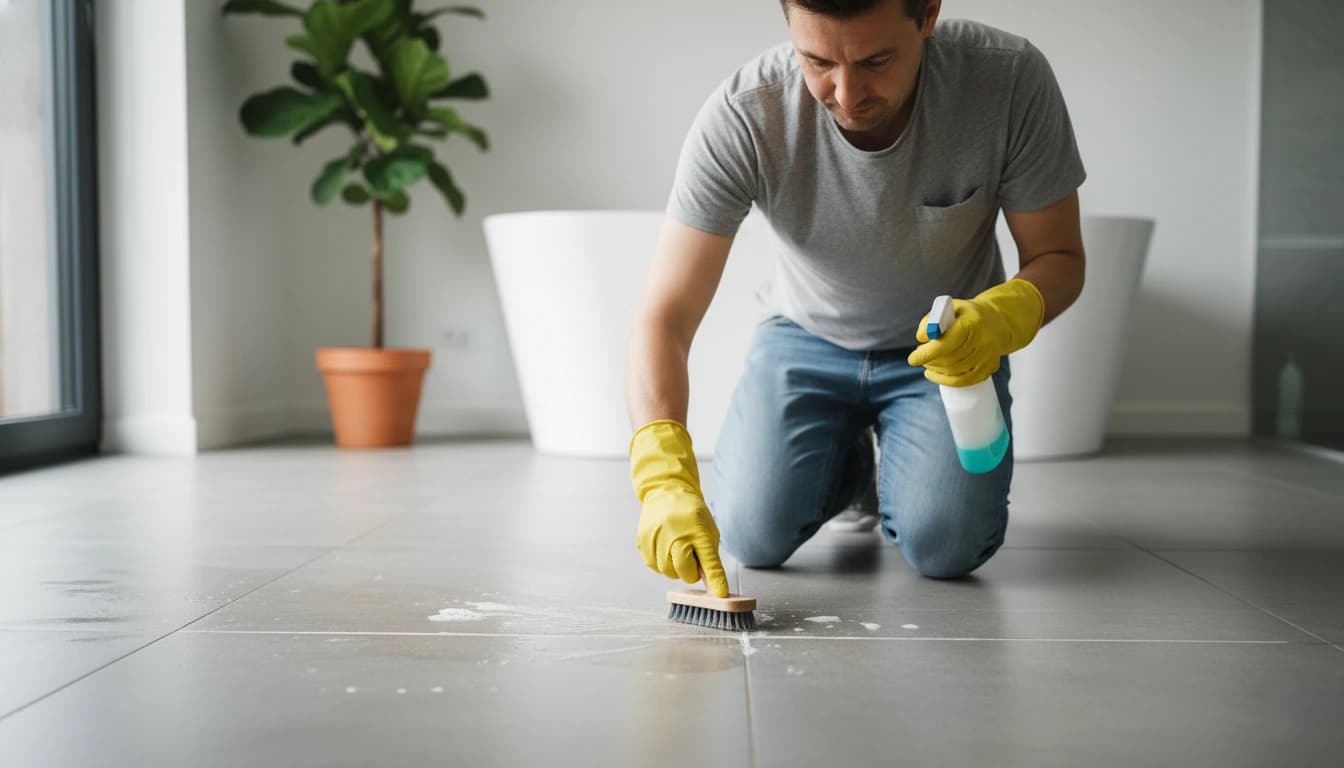
Is the grout between your tiles turning from white to grey, or worse, black with mould? You scrub until your arm hurts, but the grime seems baked in. It feels like a losing battle. Before you reach for the harshest chemical you can find, stop. The secret to a sparkling, clean finish isn't just about what you clean with; it's about knowing what you're cleaning first.
This guide cuts through the confusion and shows you the best way to clean grout for good. We'll explain why your grout gets dirty, give you a simple method that works, and show you how to pick the right cleaner for modern, long-lasting grouts like epoxy and polyurea. Let's get those lines looking new again.
Why Tile Grout Gets Dirty So Quickly
Think of traditional cement-based tile grout like a sponge. It's full of tiny pores and holes. Every time you walk on the floor or water runs down the wall, it pushes dirt, grease, and soap scum into those pores. Once it's in there, a simple wipe won't get it out. Mould loves damp, porous surfaces, which is why you often see those dark spots in shower grout.
The good news is not all epoxy tile grout is created equal. High-performance options like epoxy grout for tiles and polyurea grout are non-porous. They have a smooth, plastic-like finish that stains and mould can't penetrate. The best way to clean grout is usually as simple as a quick wipe. If you have these, your job is much easier. But if you're dealing with standard porous grout, you need the right plan of attack.
Your Step-by-Step Battle Plan for Clean Tile Grout
Forget magic one-spray solutions. A proper clean takes a little effort, but this method works. You'll need a stiff-bristled brush (an old toothbrush works for small areas), a bucket, and your chosen cleaner.
Step 1: The Prep Work
Sweep or vacuum the floor to remove loose grit. You don't want to scrub dirt deeper into the grout. For walls, wipe away any surface dust or hair.
Step 2: Apply Your Cleaner
Don't just splash it on. Apply your grout cleaner directly along the grout lines. Let it sit and do the work for you; this is crucial. Check the bottle for the recommended dwell time; usually 5-10 minutes is perfect. This gives the solution time to break down the grime, so you don't have to.
Step 3: The Scrub (The Right Way)
Use your stiff brush and scrub firmly along the grout lines. Use the length of the bristles, not the tips. For floors, a drill brush attachment can save your back and your sanity. The dirt should start to lift away. If that spot isn't coming off at all, definitely apply some more cleaner and let it sit for a longer time.
Step 4: Rinse Thoroughly
Rinse thoroughly. This stage is frequently overlooked, but it can lead to serious issues. You have to remove all traces of the cleaning solution and the dirt that has been loosened. Use a mop with clean water for floors or a wet cloth and bucket for walls. Any residue that is left will attract more dirt; thus the surface will become dirty twice as fast.
Step 5: Dry It Off
Use a dry towel or mop to soak up the standing water, especially in showers. A dry surface is a surface where mould struggles to grow.
Choosing Your Weapon: What to Clean With
The best way to clean grout depends on what's staining it.
- •
For General Dirt & Soap Scum: Start simple. A paste of baking soda and water applied to the grout line, followed by a spray of white vinegar, creates a fizzy reaction that lifts a lot of everyday grime. Rinse well.
- •
For Tough Mould & Mildew: You need a proper bathroom mould remover. Look for one that's specifically formulated for tile grout. Always follow the safety instructions, ensure the room is ventilated, and never mix chemicals.
- •
For Epoxy or Polyurea Grout: Consider yourself lucky. You likely don't need heavy chemicals. Most marks on epoxy grout for tiles or polyurea grout will wipe away with a pH-neutral cleaner and a soft cloth. Avoid abrasive scrubbing pads on these surfaces, as they can scratch the glossy finish.
- •
A word of warning: Steer clear of pure bleach or highly acidic cleaners (like some harsh toilet cleaners) on coloured grout. They can bleach the colour right out or damage the grout itself over time.
When Cleaning Isn't Enough: The Smart Upgrade
If you're cleaning the same grout every month, then you're not aware of the best way to clean grout yet. Constant scrubbing wears down porous grout, making it even more prone to staining
This is where thinking long-term makes sense. When it's time for your next reno or repair, talk to your tiler about upgrading your tile grout. Modern epoxy grout and polyurea grout are designed to solve this exact problem. Because of their non-porous nature, spikes, dirt, and mould do not have anything to which they can cling. A quick weekly wipe is often all the maintenance they need. It turns a constant chore into a simple task, saving you hours of scrubbing every year.
Investing in the right grout from the start is truly the best way to clean grout because you hardly have to clean it at all.
ZOCOO Products for This Application

P97 Polyurea Tile Grout (Gloss)
Vibrant colours that stand the test of time, with lasting durability. ZoCoo P97 (Gloss) is a two-component polyaspartic ester polyurea grout combing hardness, adhesion, and flexibility. It offers excellent weather and UV resistance to maintain colour integrity for decades. Solvent free and environmentally friendly, it can be custom matched to any tile colour for seamless finishes.
View P97
P98 Polyurea Tile Grout (Matte)
Vibrant colours that stand the test of time, with lasting durability. ZoCoo P98 (Matte) is a two-component polyaspartic ester polyurea grout combing hardness, adhesion, and flexibility. It offers excellent weather and UV resistance to maintain colour integrity for decades. Solvent free and environmentally friendly, it can be custom matched to any tile colour for seamless finishes.
View P98
W750 Waterbased Epoxy Grout
ZoCoo W750 is a two-component, water-based epoxy grout designed for high-performance bonding, chemical resistance, and long-term hygiene. Ideal for floors, walls, and tile joints, it offers smooth, mould-resistant finish with customisable colour options for both residential and commercial interiors
View W750
Frequently Asked Questions
• Can I use vinegar to clean all grout?
+• Why does my grout get dirty again so fast?
+• Is steam cleaning good for grout?
+• How do I keep my shower grout from going mouldy?
+